

Categories
- Antiques & Collectibles 13
- Architecture 36
- Art 48
- Bibles 22
- Biography & Autobiography 815
- Body, Mind & Spirit 144
- Business & Economics 28
- Children's Books 15
- Children's Fiction 11
- Computers 4
- Cooking 94
- Crafts & Hobbies 4
- Drama 346
- Education 62
- Family & Relationships 59
- Fiction 11835
- Foreign Language Study 1
- Games 19
- Gardening 17
- Health & Fitness 34
- History 1378
- House & Home 1
- Humor 147
- Juvenile Fiction 1873
- Juvenile Nonfiction 202
- Language Arts & Disciplines 89
- Law 16
- Literary Collections 686
- Literary Criticism 179
- Mathematics 13
- Medical 41
- Music 40
- Nature 180
- Non-Classifiable 1768
- Performing Arts 7
- Periodicals 1453
- Philosophy 65
- Photography 2
- Poetry 896
- Political Science 203
- Psychology 44
- Reference 154
- Religion 515
- Science 127
- Self-Help 85
- Social Science 83
- Sports & Recreation 34
- Study Aids 3
- Technology & Engineering 60
- Transportation 23
- Travel 463
- True Crime 29
Erskine Childers
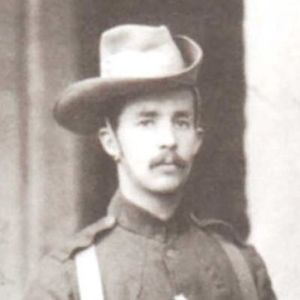
Erskine Childers (1870–1922) was a British-born writer and Irish nationalist. He is best known for his espionage novel "The Riddle of the Sands" (1903), considered one of the first modern spy thrillers. Childers became involved in Irish republicanism and played a significant role in the Irish War of Independence, notably smuggling arms into Ireland for the cause. He was executed in 1922 during the Irish Civil War, but remains a key figure in both Irish literature and history.
Author's Books:
Sort by:
by:
Erskine Childers
I HAVE read of men who, when forced by their calling to live for long periods in utter solitude—save for a few black faces—have made it a rule to dress regularly for dinner in order to maintain their self-respect and prevent a relapse into barbarism. It was in some such spirit, with an added touch of self-consciousness, that, at seven o'clock in the evening of 23rd September in a recent year,...
more...
by:
Erskine Childers
CHAPTER I. THE "MONTFORT." A wintry ride—Retrospect—Embarkation—A typical day—"Stables" in rough weather—Las Palmas—The tropics—Inoculation—Journalism—Fashions—"Intelligent anticipation"—Stable-guard—Arrival. With some who left for the War it was "roses, roses, all the way." For us, the scene was the square of St. John's Wood Barracks at 2...
more...
by:
Erskine Childers
INTRODUCTION My purpose in this volume is to advocate a definite scheme of self-government for Ireland. That task necessarily involves an historical as well as a constructive argument. It would be truer, perhaps, to say that the greater part of the constructive case for Home Rule must necessarily be historical. To postulate a vague acceptance of the principle of Home Rule, and to proceed at once to the...
more...