

Categories
- Antiques & Collectibles 13
- Architecture 36
- Art 48
- Bibles 22
- Biography & Autobiography 816
- Body, Mind & Spirit 145
- Business & Economics 32
- Children's Books 15
- Children's Fiction 13
- Computers 4
- Cooking 94
- Crafts & Hobbies 4
- Drama 346
- Education 69
- Family & Relationships 62
- Fiction 11844
- Foreign Language Study 2
- Games 19
- Gardening 17
- Health & Fitness 36
- History 1383
- House & Home 1
- Humor 147
- Juvenile Fiction 1884
- Juvenile Nonfiction 202
- Language Arts & Disciplines 89
- Law 16
- Literary Collections 687
- Literary Criticism 180
- Mathematics 13
- Medical 43
- Music 40
- Nature 181
- Non-Classifiable 1768
- Performing Arts 7
- Periodicals 1453
- Philosophy 65
- Photography 2
- Poetry 897
- Political Science 208
- Psychology 44
- Reference 154
- Religion 516
- Science 128
- Self-Help 89
- Social Science 84
- Sports & Recreation 34
- Study Aids 3
- Technology & Engineering 60
- Transportation 23
- Travel 463
- True Crime 29
Ernst Wilhelm Hengstenberg
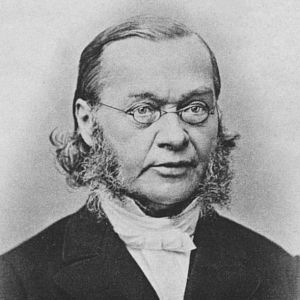
Ernst Wilhelm Hengstenberg (1802–1869) was a prominent German Lutheran theologian and scholar, best known for his conservative defense of traditional Christian doctrine. He taught Old Testament studies at the University of Berlin and was a leading voice against the liberal theology of his time. Among his most influential works are "Christology of the Old Testament" and "Commentary on the Psalms," where he argued for the messianic interpretation of many Old Testament prophecies. Hengstenberg also edited the journal "Evangelische Kirchenzeitung," which promoted his conservative theological views.
Author's Books:
Sort by:
Isaiah is the principal prophetical figure in the first period of canonical prophetism, i.e., the Assyrian period, just as Jeremiah is in the second, i.e., the Babylonian. With Isaiah are connected in the kingdom of Judah: Joel, Obadiah, and Micah; in the kingdom of Israel: Hosea, Amos, and Jonah. The name "Isaiah" signifies the "Salvation of the Lord." In this name we have the key-note...
more...
In the Messianic prophecies contained in Genesis we cannot fail to perceive a remarkable progress in clearness and definiteness. The first Messianic prediction, which was uttered immediately after the fall of Adam, is also the most indefinite. Opposed to the awful threatening there stands the consolatory promise, that the dominion of sin, and of the evil arising from sin, shall not last for ever, but...
more...