

Categories
- Antiques & Collectibles 13
- Architecture 36
- Art 48
- Bibles 22
- Biography & Autobiography 815
- Body, Mind & Spirit 144
- Business & Economics 28
- Children's Books 15
- Children's Fiction 12
- Computers 4
- Cooking 94
- Crafts & Hobbies 4
- Drama 346
- Education 63
- Family & Relationships 59
- Fiction 11840
- Foreign Language Study 1
- Games 19
- Gardening 17
- Health & Fitness 35
- History 1382
- House & Home 1
- Humor 147
- Juvenile Fiction 1877
- Juvenile Nonfiction 202
- Language Arts & Disciplines 89
- Law 16
- Literary Collections 687
- Literary Criticism 179
- Mathematics 13
- Medical 43
- Music 40
- Nature 181
- Non-Classifiable 1768
- Performing Arts 7
- Periodicals 1453
- Philosophy 65
- Photography 2
- Poetry 897
- Political Science 205
- Psychology 44
- Reference 154
- Religion 516
- Science 128
- Self-Help 86
- Social Science 83
- Sports & Recreation 34
- Study Aids 3
- Technology & Engineering 60
- Transportation 23
- Travel 463
- True Crime 29
Epictetus
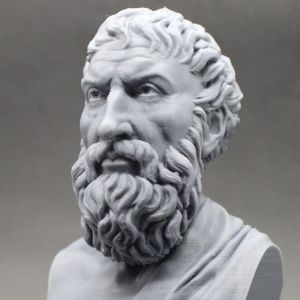
Epictetus was a Greek Stoic philosopher who lived from around 55 to 135 AD, spending much of his life in Rome as a slave before gaining his freedom. His teachings emphasized personal ethics and the importance of understanding what is within one's control versus what is not. Epictetus did not write any books himself, but his ideas were recorded by his pupil Arrian in works like "Discourses" and the "Enchiridion". His philosophy centers on the pursuit of inner freedom through self-discipline and rational thinking, deeply influencing later Stoic and philosophical thought.
Author's Books:
Sort by:
by:
Epictetus
I Are these the only works of Providence within us? What words suffice to praise or set them forth? Had we but understanding, should we ever cease hymning and blessing the Divine Power, both openly and in secret, and telling of His gracious gifts? Whether digging or ploughing or eating, should we not sing the hymn to God:— Great is God, for that He hath given us such instruments to till the ground...
more...
by:
Epictetus
A SELECTION FROM THE DISCOURSES OF EPICTETUS. OF THE THINGS WHICH ARE IN OUR POWER AND NOT IN OUR POWER.—Of all the faculties (except that which I shall soon mention), you will find not one which is capable of contemplating itself, and, consequently, not capable either of approving or disapproving. How far does the grammatic art possess the contemplating power? As far as forming a judgment about what...
more...