

Categories
- Antiques & Collectibles 13
- Architecture 36
- Art 48
- Bibles 22
- Biography & Autobiography 816
- Body, Mind & Spirit 145
- Business & Economics 30
- Children's Books 15
- Children's Fiction 13
- Computers 4
- Cooking 94
- Crafts & Hobbies 4
- Drama 346
- Education 64
- Family & Relationships 59
- Fiction 11842
- Foreign Language Study 2
- Games 19
- Gardening 17
- Health & Fitness 35
- History 1383
- House & Home 1
- Humor 147
- Juvenile Fiction 1884
- Juvenile Nonfiction 202
- Language Arts & Disciplines 89
- Law 16
- Literary Collections 687
- Literary Criticism 179
- Mathematics 13
- Medical 43
- Music 40
- Nature 181
- Non-Classifiable 1768
- Performing Arts 7
- Periodicals 1453
- Philosophy 65
- Photography 2
- Poetry 897
- Political Science 205
- Psychology 44
- Reference 154
- Religion 516
- Science 128
- Self-Help 87
- Social Science 83
- Sports & Recreation 34
- Study Aids 3
- Technology & Engineering 60
- Transportation 23
- Travel 463
- True Crime 29
Emerson Hough
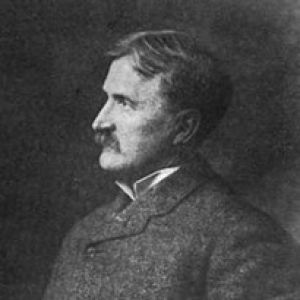
Emerson Hough was an American author born on June 28, 1857, in Newton, Iowa, and is best known for his western and historical novels. His most famous work, "The Covered Wagon" (1922), became a significant contribution to the genre, reflecting the pioneering spirit of the American West. Hough's prolific writing career, which also included non-fiction works and articles, greatly influenced the popular perception of frontier life during the late 19th and early 20th centuries.
Author's Books:
Sort by:
by:
Emerson Hough
CHAPTER I - YOUTH MARCHES "Look at 'em come, Jesse! More and more! Must be forty or fifty families." Molly Wingate, middle-aged, portly, dark browed and strong, stood at the door of the rude tent which for the time made her home. She was pointing down the road which lay like an écru ribbon thrown down across the prairie grass, bordered beyond by the timber-grown bluffs of the Missouri....
more...

by:
Emerson Hough
CHAPTER I A LADY IN COMPANY "Madam, you are charming! You have not slept, and yet you smile.No man could ask a better prisoner." She turned to him, smiling faintly. "I thank you. At least we have had breakfast, and for such mercy I am grateful to my jailer. I admit I was famished. What now?" With just the turn of a shoulder she indicated the water front, where, at the end of the dock on...
more...
by:
Emerson Hough
CHAPTER I FOLLOWING LEWIS AND CLARK ÐÑвâ¬Ðâ Well, sister,ÐÑвâ¬ÐÑ said Uncle Dick, addressing that lady as she sat busy with her needlework at the window of a comfortable hotel in the city of St. Louis, ÐÑвâ¬ÐâIÐÑвâ¬вâÑm getting restless, now that the war is over. Time to be starting out. Looks like...
more...

by:
Emerson Hough
PREFACE In offering this study of the American desperado, the author constitutes himself no apologist for the acts of any desperado; yet neither does he feel that apology is needed for the theme itself. The outlaw, the desperado—that somewhat distinct and easily recognizable figure generally known in the West as the "bad man"—is a character unique in our national history, and one whose like...
more...
by:
Emerson Hough
CHAPTER I MISS LADY Ah, but it was a sweet and wonderful thing to see Miss Lady dance, a strange and wondrous thing! She was so sweet, so strong, so full of grace, so like a bird in all her motions! Now here, now there, and back again, her feet scarce touching the floor, her loose skirt, held out between her dainty fingers, resembling wings, she swam through the air, up and down the room of the old...
more...
by:
Emerson Hough
Chapter I - The Kissing Of Miss Grace Sheraton I admit I kissed her. Perhaps I should not have done so. Perhaps I would not do so again. Had I known what was to come I could not have done so. Nevertheless I did. After all, it was not strange. All things about us conspired to be accessory and incendiary. The air of the Virginia morning was so soft and warm, the honeysuckles along the wall were so...
more...
by:
Emerson Hough
Times has changed, says Maw to herself, says she. Things ain't like what they used to be. Time was when I worked from sunup to sundown, and we didn't have no daylight-saving contraptions on the old clock, neither. The girls was too little then, and I done all the work myself—cooking, sweeping, washing and ironing, suchlike. I never got to church Sundays because I had to stay home and get...
more...
by:
Emerson Hough
CHAPTER I "Sim," said Wid Gardner, as he cast a frowning glance around him, "take it one way with another, and I expect this is a leetle the dirtiest place in the Two-Forks Valley." The man accosted did no more than turn a mild blue eye toward the speaker and resume his whittling. He smiled faintly, with a sort of apology, as the other went on. "I'll say more'n that, Sim....
more...
by:
Emerson Hough
THE YOUNG ALASKANS AT HOME IN ALASKA “ Steamboat! Steamboat!” Rob McIntyre had been angling for codfish at the top of Valdez dock for the past half-hour. Now, hearing the hoarse boom of the ocean vessel’s whistle out in the fog-bank which covered the mouth of the harbor, he pulled in his fishing-line, hurriedly threw together his heap of flapping fish, and, turning, sent shoreward the cry always...
more...
by:
Emerson Hough
CHAPTER I THE BRAZEN TONGUES The band major was a poet. His name is lost to history, but it deserves a place among the titles of the great. Only in the soul of a poet, a great man, could there have been conceived that thought by which the music of triumph should pass the little pinnacle of human exultation, and reach the higher plane of human sympathy. Forty black horses, keeping step; forty...
more...