

Categories
- Antiques & Collectibles 13
- Architecture 36
- Art 48
- Bibles 22
- Biography & Autobiography 815
- Body, Mind & Spirit 144
- Business & Economics 28
- Children's Books 15
- Children's Fiction 12
- Computers 4
- Cooking 94
- Crafts & Hobbies 4
- Drama 346
- Education 63
- Family & Relationships 59
- Fiction 11839
- Foreign Language Study 1
- Games 19
- Gardening 17
- Health & Fitness 35
- History 1382
- House & Home 1
- Humor 147
- Juvenile Fiction 1877
- Juvenile Nonfiction 202
- Language Arts & Disciplines 89
- Law 16
- Literary Collections 687
- Literary Criticism 179
- Mathematics 13
- Medical 43
- Music 40
- Nature 181
- Non-Classifiable 1768
- Performing Arts 7
- Periodicals 1453
- Philosophy 65
- Photography 2
- Poetry 897
- Political Science 205
- Psychology 44
- Reference 154
- Religion 516
- Science 128
- Self-Help 86
- Social Science 83
- Sports & Recreation 34
- Study Aids 3
- Technology & Engineering 60
- Transportation 23
- Travel 463
- True Crime 29
Edwin Abbott Abbott
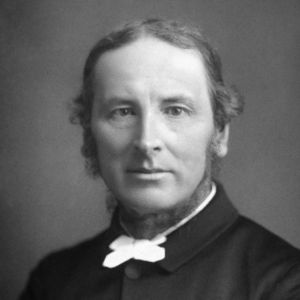
Edwin Abbott Abbott (1838–1926) was an English schoolmaster, theologian, and writer best known for his novella "Flatland: A Romance of Many Dimensions" (1884). "Flatland" explores the concept of dimensions through the story of a two-dimensional world inhabited by geometric shapes, serving as both a satirical social commentary and a mathematical allegory. Abbott was also a noted scholar of Shakespeare and biblical literature, authoring several theological and educational works. His innovative ideas in "Flatland" continue to influence discussions in mathematics, physics, and literature today.
Author's Books:
Sort by:
SECTION 1 Of the Nature of Flatland I call our world Flatland, not because we call it so, but to make its nature clearer to you, my happy readers, who are privileged to live in Space. Imagine a vast sheet of paper on which straight Lines, Triangles, Squares, Pentagons, Hexagons, and other figures, instead of remaining fixed in their places, move freely about, on or in the surface, but without the power...
more...
If my poor Flatland friend retained the vigour of mind which he enjoyed when he began to compose these Memoirs, I should not now need to represent him in this preface, in which he desires, firstly, to return his thanks to his readers and critics in Spaceland, whose appreciation has, with unexpected celerity, required a second edition of his work; secondly, to apologize for certain errors and misprints...
more...
PREFACE. Almost every English boy can be taught to write clearly, so far at least as clearness depends upon the arrangement of words. Force, elegance, and variety of style are more difficult to teach, and far more difficult to learn; but clear writing can be reduced to rules. To teach the art of writing clearly is the main object of these Rules and Exercises. Ambiguity may arise, not only from bad...
more...