

Categories
- Antiques & Collectibles 13
- Architecture 36
- Art 48
- Bibles 22
- Biography & Autobiography 815
- Body, Mind & Spirit 144
- Business & Economics 28
- Children's Books 15
- Children's Fiction 12
- Computers 4
- Cooking 94
- Crafts & Hobbies 4
- Drama 346
- Education 63
- Family & Relationships 59
- Fiction 11839
- Foreign Language Study 1
- Games 19
- Gardening 17
- Health & Fitness 35
- History 1382
- House & Home 1
- Humor 147
- Juvenile Fiction 1877
- Juvenile Nonfiction 202
- Language Arts & Disciplines 89
- Law 16
- Literary Collections 687
- Literary Criticism 179
- Mathematics 13
- Medical 43
- Music 40
- Nature 181
- Non-Classifiable 1768
- Performing Arts 7
- Periodicals 1453
- Philosophy 65
- Photography 2
- Poetry 897
- Political Science 205
- Psychology 44
- Reference 154
- Religion 516
- Science 128
- Self-Help 86
- Social Science 83
- Sports & Recreation 34
- Study Aids 3
- Technology & Engineering 60
- Transportation 23
- Travel 463
- True Crime 29
Edward Gibbon
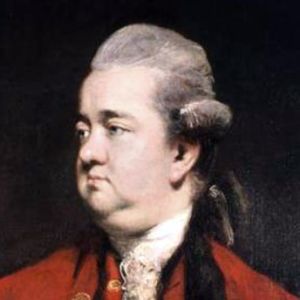
Edward Gibbon was an English historian, writer, and Member of Parliament, best known for his seminal work, "The History of the Decline and Fall of the Roman Empire." Published between 1776 and 1788, this monumental series spans six volumes and offers a detailed chronicle of Roman history from the height of the Empire to the fall of Byzantium. Gibbon's work is acclaimed for its rigorous scholarship, elegant prose, and critical analysis of historical sources.
Author's Books:
Sort by:
by:
Edward Gibbon
Chapter XXXIX: Gothic Kingdom Of Italy.—Part I. Zeno And Anastasius, Emperors Of The East.—Birth,Education, And First Exploits Of Theodoric The Ostrogoth.—His Invasion And Conquest Of Italy.—The Gothic Kingdom OfItaly.—State Of The West.—Military And Civil Government.—The Senator Boethius.—Last Acts And Death Of Theodoric. After the fall of the Roman empire in the West, an interval of...
more...
by:
Edward Gibbon
Chapter XLIX: Conquest Of Italy By The Franks.—Part I. Introduction, Worship, And Persecution Of Images.—Revolt OfItaly And Rome.—Temporal Dominion Of The Popes.—ConquestOf Italy By The Franks.—Establishment Of Images.—CharacterAnd Coronation Of Charlemagne.—Restoration And Decay Of TheRoman Empire In The West.—Independence Of Italy.—Constitution Of The Germanic Body. In the...
more...
by:
Edward Gibbon
Chapter XXVII: Civil Wars, Reign Of Theodosius.—Part I. Death Of Gratian.—Ruin Of Arianism.—St. Ambrose.—FirstCivil War, Against Maximus.—Character, Administration, AndPenance Of Theodosius.—Death Of Valentinian II.—SecondCivil War, Against Eugenius.—Death Of Theodosius. The fame of Gratian, before he had accomplished the twentieth year of his age, was equal to that of the most...
more...
by:
Edward Gibbon
Chapter LIX: The Crusades.—Part I. Preservation Of The Greek Empire.—Numbers, Passage, AndEvent, Of The Second And Third Crusades.—St. Bernard.—Reign Of Saladin In Egypt And Syria.—His Conquest OfJerusalem.—Naval Crusades.—Richard The First Of England.—Pope Innocent The Third; And The Fourth And Fifth Crusades.—The Emperor Frederic The Second.—Louis The Ninth OfFrance; And The Two...
more...
by:
Edward Gibbon
Chapter XVI—Conduct Towards The Christians, From Nero To Constantine.—Part I. The Conduct Of The Roman Government Towards The Christians,From The Reign Of Nero To That Of Constantine. If we seriously consider the purity of the Christian religion, the sanctity of its moral precepts, and the innocent as well as austere lives of the greater number of those who during the first ages embraced the faith...
more...
by:
Edward Gibbon
Preface By The Editor. The great work of Gibbon is indispensable to the student of history. The literature of Europe offers no substitute for "The Decline and Fall of the Roman Empire." It has obtained undisputed possession, as rightful occupant, of the vast period which it comprehends. However some subjects, which it embraces, may have undergone more complete investigation, on the general view...
more...
by:
Edward Gibbon
In the fifty-second year of my age, after the completion of an arduous and successful work, I now propose to employ some moments of my leisure in reviewing the simple transactions of a private and literary life. Truth, naked unblushing truth, the first virtue of more serious history, must be the sole recommendation of this personal narrative. The style shall be simple and familiar; but style is the...
more...