

Categories
- Antiques & Collectibles 13
- Architecture 36
- Art 48
- Bibles 22
- Biography & Autobiography 816
- Body, Mind & Spirit 145
- Business & Economics 32
- Children's Books 15
- Children's Fiction 13
- Computers 4
- Cooking 94
- Crafts & Hobbies 4
- Drama 346
- Education 68
- Family & Relationships 62
- Fiction 11845
- Foreign Language Study 2
- Games 19
- Gardening 17
- Health & Fitness 36
- History 1383
- House & Home 1
- Humor 147
- Juvenile Fiction 1884
- Juvenile Nonfiction 202
- Language Arts & Disciplines 89
- Law 16
- Literary Collections 687
- Literary Criticism 180
- Mathematics 13
- Medical 43
- Music 40
- Nature 181
- Non-Classifiable 1768
- Performing Arts 7
- Periodicals 1453
- Philosophy 65
- Photography 2
- Poetry 898
- Political Science 206
- Psychology 44
- Reference 154
- Religion 516
- Science 128
- Self-Help 89
- Social Science 84
- Sports & Recreation 34
- Study Aids 3
- Technology & Engineering 60
- Transportation 23
- Travel 463
- True Crime 29
Edward Augustus Freeman
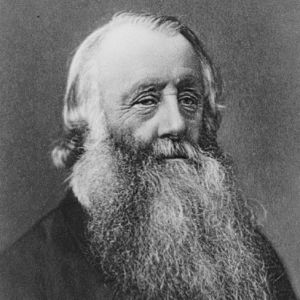
Edward Augustus Freeman (1823–1892) was a British historian and prolific writer, best known for his work on the history of the Norman Conquest of England. His most notable work is "The History of the Norman Conquest of England" (1867-1879), which provided a detailed and scholarly analysis of the period. Freeman was a supporter of racial theories, particularly Anglo-Saxonism, and believed in the superiority of certain races in shaping history. Besides his historical writings, Freeman was also active in politics and served as the Regius Professor of Modern History at Oxford University.
Author's Books:
Sort by:
THE SCIENCE OF HISTORY. A LECTURE DELIVERED BY JAMES ANTHONY FROUDE AT THE ROYAL INSTITUTION FEBRUARY 5, 1864. Ladies and Gentlemen,—I have undertaken to speak to you this evening on what is called the Science of History. I fear it is a dry subject; and there seems, indeed, something incongruous in the very connection of such words as Science and History. It is as if we were to talk of the color of...
more...
PREFACE "Beyond doubt the finished historian must be a traveller: he must see with his own eyes the true look of a wide land; he must see, too, with his eyes the very spots where great events happened; he must mark the lie of a city, and take in, as far as a non-technical eye can, all that is special about a battle-field." So wrote Mr. Freeman in his Methods of Historical Study, and he...
more...