

Categories
- Antiques & Collectibles 13
- Architecture 36
- Art 48
- Bibles 22
- Biography & Autobiography 815
- Body, Mind & Spirit 144
- Business & Economics 28
- Children's Books 15
- Children's Fiction 12
- Computers 4
- Cooking 94
- Crafts & Hobbies 4
- Drama 346
- Education 63
- Family & Relationships 59
- Fiction 11839
- Foreign Language Study 1
- Games 19
- Gardening 17
- Health & Fitness 35
- History 1382
- House & Home 1
- Humor 147
- Juvenile Fiction 1873
- Juvenile Nonfiction 202
- Language Arts & Disciplines 89
- Law 16
- Literary Collections 687
- Literary Criticism 179
- Mathematics 13
- Medical 43
- Music 40
- Nature 181
- Non-Classifiable 1768
- Performing Arts 7
- Periodicals 1453
- Philosophy 65
- Photography 2
- Poetry 897
- Political Science 205
- Psychology 44
- Reference 154
- Religion 515
- Science 128
- Self-Help 86
- Social Science 83
- Sports & Recreation 34
- Study Aids 3
- Technology & Engineering 60
- Transportation 23
- Travel 463
- True Crime 29
E. A. Wallis (Ernest Alfred Wallis) Budge
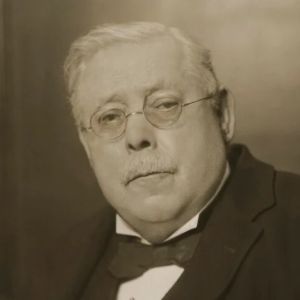
Ernest Alfred Wallis Budge (1857–1934) was a renowned British Egyptologist, Orientalist, and philologist. He worked at the British Museum, where he significantly contributed to the collection and understanding of ancient Egyptian artifacts, particularly through his translations of ancient texts, including the Egyptian Book of the Dead. Budge authored numerous works on Egyptology and Assyriology, making ancient Near Eastern languages and cultures more accessible to both scholars and the general public.
Author's Books:
Sort by:
CHAPTER I.THE BELIEF IN GOD ALMIGHTY.A study of ancient Egyptian religious texts will convince the reader that the Egyptians believed in One God, who was self-existent, immortal, invisible, eternal, omniscient, almighty, and inscrutable; the maker of the heavens, earth, and underworld; the creator of the sky and the sea, men and women, animals and birds, fish and creeping things, trees and plants, and...
more...
PREFACE The welcome which has been accorded to the volumes of this Series, and the fact that some of them have passed into second and third editions, suggest that these little books have been found useful by beginners in Egyptology and others. Hitherto the object of them has been to supply information about the Religion, Magic, Language, and History of the ancient Egyptians, and to provide editions of...
more...
DISCOVERY OF THE TABLETS. The baked clay tablets and portions of tablets which describe the views and beliefs of the Babylonians and Assyrians about the Creation were discovered by Mr. (later Sir) A.H. Layard, Mormuzd Rassam and George Smith, Assistant in the Department of Oriental Antiquities in the British Museum. They were found among the ruins of the Palace and Library of Ashur-bani-pal (B.C....
more...
The Discovery of the Tablets at Nineveh by Layard, Rassam and Smith. In 1845-47 and again in 1849-51 Mr. (later Sir) A. H. Layard carried out a series of excavations among the ruins of the ancient city of Nineveh, "that great city, wherein are more than sixteen thousand persons that cannot discern between their right hand and their left; and also much cattle" (Jonah iv, II). Its ruins lie on...
more...
CHAPTER I The Title. "Book of the Dead" is the title now commonly given to the great collection of funerary texts which the ancient Egyptian scribes composed for the benefit of the dead. These consist of spells and incantations, hymns and litanies, magical formulae and names, words of power and prayers, and they are found cut or painted on walls of pyramids and tombs, and painted on coffins and...
more...
CHAPTER I THOTH, THE AUTHOR OF EGYPTIAN LITERATURE.WRITING MATERIALS, ETC. The Literature of ancient Egypt is the product of a period of about four thousand years, and it was written in three kinds of writing, which are called hieroglyphic, hieratic, and demotic. In the first of these the characters were pictures of objects, in the second the forms of the characters were made as simple as possible so...
more...