

Categories
- Antiques & Collectibles 13
- Architecture 36
- Art 48
- Bibles 22
- Biography & Autobiography 815
- Body, Mind & Spirit 144
- Business & Economics 28
- Children's Books 15
- Children's Fiction 12
- Computers 4
- Cooking 94
- Crafts & Hobbies 4
- Drama 346
- Education 63
- Family & Relationships 59
- Fiction 11839
- Foreign Language Study 1
- Games 19
- Gardening 17
- Health & Fitness 35
- History 1382
- House & Home 1
- Humor 147
- Juvenile Fiction 1873
- Juvenile Nonfiction 202
- Language Arts & Disciplines 89
- Law 16
- Literary Collections 687
- Literary Criticism 179
- Mathematics 13
- Medical 43
- Music 40
- Nature 181
- Non-Classifiable 1768
- Performing Arts 7
- Periodicals 1453
- Philosophy 65
- Photography 2
- Poetry 897
- Political Science 205
- Psychology 44
- Reference 154
- Religion 516
- Science 128
- Self-Help 86
- Social Science 83
- Sports & Recreation 34
- Study Aids 3
- Technology & Engineering 60
- Transportation 23
- Travel 463
- True Crime 29
Dora Sigerson Shorter
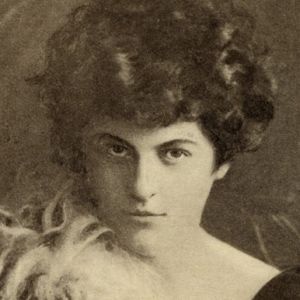
Dora Sigerson Shorter (1866–1918) was an Irish poet and novelist, known for her work as part of the Irish Literary Revival. She wrote numerous poems and stories that reflected themes of Irish nationalism, folklore, and melancholy. Some of her notable works include the poetry collections "The Fairy Changeling and Other Poems" and "The Woman Who Went to Hell and Other Ballads and Legends." Sigerson Shorter was also a sculptor and married the English writer Clement Shorter, contributing significantly to both Irish literature and the Celtic Revival movement.
Author's Books:
Sort by:
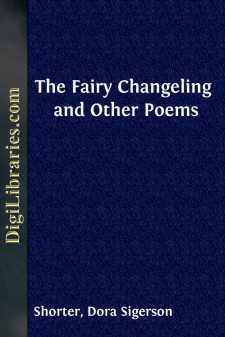
THE FAIRY CHANGELING Dermod O’Byrne of Omah townIn his garden strode up and down;He pulled his beard, and he beat his breast;And this is his trouble and woe confessed: “The good-folk came in the night, and theyHave stolen my bonny wean away;Have put in his place a changeling,A weashy, weakly, wizen thing! “From the speckled hen nine eggs I stole,And lighting a fire of a glowing coal,I fried the...
more...
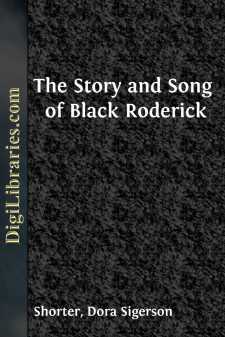
This is the story of Black Earl Roderick, the story and the song of his pride and of his humbling; of the bitterness of his heart, and of the love that came to it at last; of his threatened destruction, and the strange and wonderful way of his salvation. So shall I begin and tell. He left his gray castle at the dawn of the morning, and with many a knight to bear him company rode, not eager and swift,...
more...