

Categories
- Antiques & Collectibles 13
- Architecture 36
- Art 48
- Bibles 22
- Biography & Autobiography 816
- Body, Mind & Spirit 145
- Business & Economics 28
- Children's Books 17
- Children's Fiction 14
- Computers 4
- Cooking 94
- Crafts & Hobbies 4
- Drama 346
- Education 58
- Family & Relationships 59
- Fiction 11834
- Foreign Language Study 3
- Games 19
- Gardening 17
- Health & Fitness 34
- History 1378
- House & Home 1
- Humor 147
- Juvenile Fiction 1873
- Juvenile Nonfiction 202
- Language Arts & Disciplines 89
- Law 16
- Literary Collections 686
- Literary Criticism 179
- Mathematics 13
- Medical 41
- Music 40
- Nature 179
- Non-Classifiable 1768
- Performing Arts 7
- Periodicals 1453
- Philosophy 66
- Photography 2
- Poetry 897
- Political Science 203
- Psychology 45
- Reference 154
- Religion 516
- Science 126
- Self-Help 85
- Social Science 82
- Sports & Recreation 34
- Study Aids 3
- Technology & Engineering 59
- Transportation 23
- Travel 463
- True Crime 29
Charles Kingsley
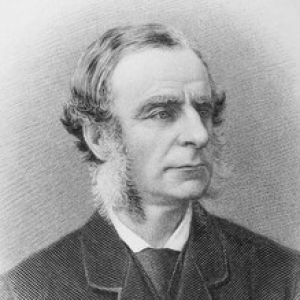
Charles Kingsley (1819-1875) was a prominent English clergyman, university professor, and writer, known for his works of fiction and his role in the Christian socialist movement. His notable works include the children's novel "The Water-Babies" (1863) and the historical novel "Westward Ho!" (1855). Kingsley's writings often reflected his social and religious views, advocating for social reform and emphasizing the importance of moral values.
Author's Books:
Sort by:

by:
Charles Kingsley
LECTURE I.WESTMINSTER ABBEY. Reverence for age, at least so it has long seemed to me, reverence for age, I say, is a fair test of the vigour of youth; and, conversely, insolence toward the old and the past, whether in individuals or in nations, is a sign rather of weakness than of strength. And the cause, I think, is this. The rich and strong young natures, which feel themselves capable of original...
more...

by:
Charles Kingsley
PREFACE Never shall I forget the moment when for the last time I gazed upon the manly features of Charles Kingsley, features which Death had rendered calm, grand, sublime. The constant struggle that in life seemed to allow no rest to his expression, the spirit, like a caged lion, shaking the bars of his prison, the mind striving for utterance, the soul wearying for loving response,—all that was...
more...

by:
Charles Kingsley
THE FIRST DISCOVERY OF AMERICA Let me begin this lecture with a scene in the North Atlantic 863 years since. “Bjarne Grimolfson was blown with his ship into the Irish Ocean; and there came worms and the ship began to sink under them. They had a boat which they had payed with seals’ blubber, for that the sea-worms will not hurt. But when they got into the boat they saw that it would not hold...
more...

by:
Charles Kingsley
PREFACE The rules of the Royal Institution forbid (and wisely) religious or political controversy. It was therefore impossible for me in these Lectures, to say much which had to be said, in drawing a just and complete picture of the Ancien Régime in France. The passages inserted between brackets, which bear on religious matters, were accordingly not spoken at the Royal Institution. But more. It...
more...

by:
Charles Kingsley
I. OUT OF THE DEEP OF SUFFERING AND SORROW. Save me, O God, for the waters are come in even unto my soul: I am come into deep waters; so that the floods run over me.—Ps. lxix. 1, 2. I am brought into so great trouble and misery: that I go mourning all the day long.—Ps. xxxviii. 6. The sorrows of my heart are enlarged: Oh! bring Thou me out of my distress.—Ps. xxv. 17. The Lord hath heard the...
more...

by:
Charles Kingsley
CHAPTER XV. THE CRUISE OF THE WATERWITCH. The middle of August is come at last; and with it the solemn day on which Frederick Viscount Scoutbush may be expected to revisit the home of his ancestors. Elsley has gradually made up his mind to the inevitable, with a stately sulkiness: and comforts himself, as the time draws near, with the thought that, after all, his brother-in-law is not a very formidable...
more...

by:
Charles Kingsley
PRELUDE. The heroic deeds of Highlanders, both in these islands and elsewhere, have been told in verse and prose, and not more often, nor more loudly, than they deserve. But we must remember, now and then, that there have been heroes likewise in the lowland and in the fen. Why, however, poets have so seldom sung of them; why no historian, save Mr. Motley in his "Rise of the Dutch Republic," has...
more...

by:
Charles Kingsley
January. Welcome, wild North-easter! Shame it is to seeOdes to every zephyr: Ne’er a verse to thee.. . . . .Tired we are of summer, Tired of gaudy glare,Showers soft and steaming, Hot and breathless air.Tired of listless dreaming Through the lazy day:Jovial wind of winter Turn us out to play!Sweep the golden reed-beds; Crisp the lazy dyke;Hunger into madness Every...
more...
by:
Charles Kingsley
CHAPTER I—THE GLEN You find it dull walking up here upon Hartford Bridge Flat this sad November day? Well, I do not deny that the moor looks somewhat dreary, though dull it need never be. Though the fog is clinging to the fir-trees, and creeping among the heather, till you cannot see as far as Minley Corner, hardly as far as Bramshill woods—and all the Berkshire hills are as invisible as if it...
more...

by:
Charles Kingsley
CHAPTER IHOW MR. OXENHAM SAW THE WHITE BIRD"The hollow oak our palace is,Our heritage the sea." All who have travelled through the delicious scenery of North Devon must needs know the little white town of Bideford, which slopes upwards from its broad tide-river paved with yellow sands, and many-arched old bridge where salmon wait for autumn floods, toward the pleasant upland on the west. Above...
more...