

Categories
- Antiques & Collectibles 13
- Architecture 36
- Art 48
- Bibles 22
- Biography & Autobiography 815
- Body, Mind & Spirit 144
- Business & Economics 28
- Children's Books 15
- Children's Fiction 12
- Computers 4
- Cooking 94
- Crafts & Hobbies 4
- Drama 346
- Education 63
- Family & Relationships 59
- Fiction 11839
- Foreign Language Study 1
- Games 19
- Gardening 17
- Health & Fitness 35
- History 1382
- House & Home 1
- Humor 147
- Juvenile Fiction 1873
- Juvenile Nonfiction 202
- Language Arts & Disciplines 89
- Law 16
- Literary Collections 687
- Literary Criticism 179
- Mathematics 13
- Medical 43
- Music 40
- Nature 181
- Non-Classifiable 1768
- Performing Arts 7
- Periodicals 1453
- Philosophy 65
- Photography 2
- Poetry 897
- Political Science 205
- Psychology 44
- Reference 154
- Religion 516
- Science 128
- Self-Help 86
- Social Science 83
- Sports & Recreation 34
- Study Aids 3
- Technology & Engineering 60
- Transportation 23
- Travel 463
- True Crime 29
Charles Eliot
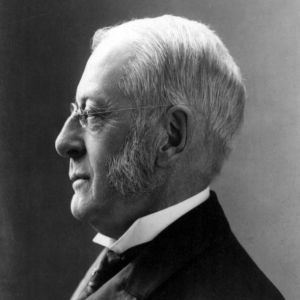
Charles William Eliot (1834–1926) was a notable American educator and writer, best known for serving as the president of Harvard University for 40 years (1869–1909). During his tenure, he significantly reformed and expanded the university, transforming it into a modern research institution. Eliot also edited the famous 50-volume anthology titled "The Harvard Classics," designed to offer a comprehensive liberal education through classic works of literature and philosophy. His writings and educational philosophy emphasized broadening access to education and encouraging individual learning.
Author's Books:
Sort by:
by:
Charles Eliot
CHAPTER XXXIV EXPANSION OF INDIAN INFLUENCE The subject of this Book is the expansion of Indian influence throughout Eastern Asia and the neighbouring islands. That influence is clear and wide-spread, nay almost universal, and it is with justice that we speak of Further India and the Dutch call their colonies Neerlands Indië. For some early chapters in the story of this expansion the dates and details...
more...
by:
Charles Eliot
CHAPTER XVI MAIN FEATURES OF THE MAHAYANA The obscurest period in the history of Buddhism is that which follows the reign of Asoka, but the enquirer cannot grope for long in these dark ages without stumbling upon the word Mahayana. This is the name given to a movement which in its various phases may be regarded as a philosophical school, a sect and a church, and though it is not always easy to define...
more...
by:
Charles Eliot
INTRODUCTION 1. Influence of Indian Thought in Eastern Asia Probably the first thought which will occur to the reader who is acquainted with the matters treated in this work will be that the subject is too large. A history of Hinduism or Buddhism or even of both within the frontiers of India may be a profitable though arduous task, but to attempt a historical sketch of the two faiths in their whole...
more...