

Categories
- Antiques & Collectibles 13
- Architecture 36
- Art 48
- Bibles 22
- Biography & Autobiography 815
- Body, Mind & Spirit 144
- Business & Economics 28
- Children's Books 15
- Children's Fiction 12
- Computers 4
- Cooking 94
- Crafts & Hobbies 4
- Drama 346
- Education 63
- Family & Relationships 59
- Fiction 11839
- Foreign Language Study 1
- Games 19
- Gardening 17
- Health & Fitness 35
- History 1382
- House & Home 1
- Humor 147
- Juvenile Fiction 1873
- Juvenile Nonfiction 202
- Language Arts & Disciplines 89
- Law 16
- Literary Collections 687
- Literary Criticism 179
- Mathematics 13
- Medical 43
- Music 40
- Nature 181
- Non-Classifiable 1768
- Performing Arts 7
- Periodicals 1453
- Philosophy 65
- Photography 2
- Poetry 897
- Political Science 205
- Psychology 44
- Reference 154
- Religion 516
- Science 128
- Self-Help 86
- Social Science 83
- Sports & Recreation 34
- Study Aids 3
- Technology & Engineering 60
- Transportation 23
- Travel 463
- True Crime 29
C. C. (Christopher Columbus) Andrews
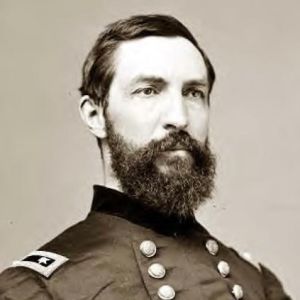
Christopher Columbus Andrews (1829–1922) was an American Civil War general, diplomat, and writer. Known for his expertise in forestry, he authored several influential works on the subject, including "Practical Forestry" and "Forest Trees of Minnesota." Andrews also wrote on a range of topics from military history to politics, drawing on his extensive experience as a soldier and diplomat in Scandinavia. His writings significantly contributed to the development of forestry practices and conservation efforts in the United States.
Author's Books:
Sort by:

ST. CLOUD TO ST. PAUL. Importance of starting early— Judge Story's theory of early rising— Rustic scenery— Horses and mules— Surveyors— Humboldt— Baked fish— Getting off the track— Burning of hay stacks— Supper at St. Anthony— Arrival at the Fuller House. ST. PAUL, October, 1856. I WAS up by the gray dawn of the morning of yesterday, and after an early but excellent breakfast,...
more...
The duty of bringing up the young in the way of usefulness has ever been acknowledged as of utmost importance to the well-being and safety of a State. So imperative was this obligation considered by Solon, the Athenian lawgiver, that he excused children from maintaining their parents, when old and feeble, if they had neglected to qualify them for some useful art or profession. Although this principle...
more...