

Categories
- Antiques & Collectibles 13
- Architecture 36
- Art 48
- Bibles 22
- Biography & Autobiography 815
- Body, Mind & Spirit 144
- Business & Economics 28
- Children's Books 15
- Children's Fiction 12
- Computers 4
- Cooking 94
- Crafts & Hobbies 4
- Drama 346
- Education 63
- Family & Relationships 59
- Fiction 11839
- Foreign Language Study 1
- Games 19
- Gardening 17
- Health & Fitness 35
- History 1382
- House & Home 1
- Humor 147
- Juvenile Fiction 1873
- Juvenile Nonfiction 202
- Language Arts & Disciplines 89
- Law 16
- Literary Collections 687
- Literary Criticism 179
- Mathematics 13
- Medical 43
- Music 40
- Nature 181
- Non-Classifiable 1768
- Performing Arts 7
- Periodicals 1453
- Philosophy 65
- Photography 2
- Poetry 897
- Political Science 205
- Psychology 44
- Reference 154
- Religion 516
- Science 128
- Self-Help 86
- Social Science 83
- Sports & Recreation 34
- Study Aids 3
- Technology & Engineering 60
- Transportation 23
- Travel 463
- True Crime 29
Austin Dobson
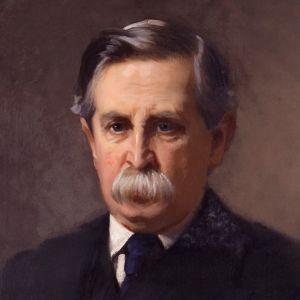
Austin Dobson (1840-1921) was an English poet, essayist, and biographer, renowned for his mastery of English verse and light poetry. He was particularly influenced by 18th-century literature and is best known for his charming and elegant poems, such as those collected in "Vignettes in Rhyme" and "At the Sign of the Lyre". Dobson also wrote several biographies, including works on figures like Henry Fielding and Oliver Goldsmith. His writing blends wit, classical references, and a light-hearted approach, making him a significant literary figure of his time.
Author's Books:
Sort by:
by:
Austin Dobson
EARLY YEARS—FIRST PLAYS. Like his contemporary Smollett, Henry Fielding came of an ancient family, and might, in his Horatian moods, have traced his origin to Inachus. The lineage of the house of Denbigh, as given in Burke, fully justifies the splendid but sufficiently quoted eulogy of Gibbon. From that first Jeffrey of Hapsburgh, who came to England, temp. Henry III., and assumed the name of...
more...
by:
Austin Dobson
ON SOME BOOKS AND THEIR ASSOCIATIONS New books can have few associations. They may reach us on the best deckle-edged Whatman paper, in the newest types of famous presses, with backs of embossed vellum, with tasteful tasselled strings,—and yet be no more to us than the constrained and uneasy acquaintances of yesterday. Friends they may become to-morrow, the day after,—perhaps "hunc in annum et...
more...

by:
Austin Dobson
AT THE SIGN OF THE LYRE. "At the Sign of the Lyre," Good Folk, we present you With the pick of our quire, And we hope to content you! Here be Ballad and Song, The fruits of our leisure, Some short and some long— May they all give you pleasure! But if, when you read, They should fail to restore you, Farewell, and God-speed— The world is before you! THE LADIES OF ST. JAMES'S. A PROPER...
more...