

Categories
- Antiques & Collectibles 13
- Architecture 36
- Art 48
- Bibles 22
- Biography & Autobiography 815
- Body, Mind & Spirit 144
- Business & Economics 28
- Children's Books 15
- Children's Fiction 12
- Computers 4
- Cooking 94
- Crafts & Hobbies 4
- Drama 346
- Education 63
- Family & Relationships 59
- Fiction 11839
- Foreign Language Study 1
- Games 19
- Gardening 17
- Health & Fitness 35
- History 1382
- House & Home 1
- Humor 147
- Juvenile Fiction 1877
- Juvenile Nonfiction 202
- Language Arts & Disciplines 89
- Law 16
- Literary Collections 687
- Literary Criticism 179
- Mathematics 13
- Medical 43
- Music 40
- Nature 181
- Non-Classifiable 1768
- Performing Arts 7
- Periodicals 1453
- Philosophy 65
- Photography 2
- Poetry 897
- Political Science 205
- Psychology 44
- Reference 154
- Religion 516
- Science 128
- Self-Help 86
- Social Science 83
- Sports & Recreation 34
- Study Aids 3
- Technology & Engineering 60
- Transportation 23
- Travel 463
- True Crime 29
Alfred John Church
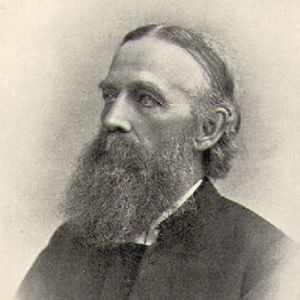
Alfred John Church (1829–1912) was an English classical scholar, historian, and author, best known for adapting ancient works for younger audiences. He translated and retold numerous classical texts, particularly those from Roman and Greek literature, making them accessible through popular books like "Stories from Homer" and "Stories from Virgil." Church was also a schoolmaster and professor of Latin, contributing significantly to the field of classical education. His works brought the ancient world to life for generations of readers, blending education with storytelling.
Author's Books:
Sort by:
The Story Of The Love Of Alcestis. Asclepius, the son of Apollo, being a mighty physician, raised men from the dead. But Zeus was wroth that a man should have such power, and so make of no effect the ordinance of the Gods. Wherefore he smote Asclepius with a thunderbolt and slew him. And when Apollo knew this, he slew the Cyclopés that had made the thunderbolts for his father Zeus, for men say that...
more...
INTRODUCTION Three thousand years ago the world was still young. The western continent was a huge wilderness, and the greater part of Europe was inhabited by savage and wandering tribes. Only a few nations at the eastern end of the Mediterranean and in the neighbouring parts of Asia had learned to dwell in cities, to use a written language, to make laws for themselves, and to live in a more orderly...
more...

CHAPTER I. ~~ THE STORY OF ROMULUS AND OF NUMA. Æneas of Troy, coming to the land of Italy, took to wife Lavinia, daughter of King Latinus, and built him a city, which he called Lavinium, after the name of his wife. And, after thirty years, his son Ascanius went forth from Lavinium with much people, and built him a new city, which he called Alba. In this city reigned kings of the house and lineage of...
more...
CHAPTER I. A ROMAN BOY. A Roman father's first duty to his boy, after lifting him up in his arms in token that he was a true son of the house, was to furnish him with a first name out of the scanty list (just seventeen) to which his choice was limited. This naming was done on the eighth day after birth, and was accompanied with some religious ceremonies, and with a feast to which kinsfolk were...
more...