

Categories
- Antiques & Collectibles 13
- Architecture 36
- Art 48
- Bibles 22
- Biography & Autobiography 816
- Body, Mind & Spirit 145
- Business & Economics 32
- Children's Books 15
- Children's Fiction 13
- Computers 4
- Cooking 94
- Crafts & Hobbies 4
- Drama 346
- Education 68
- Family & Relationships 62
- Fiction 11845
- Foreign Language Study 2
- Games 19
- Gardening 17
- Health & Fitness 36
- History 1383
- House & Home 1
- Humor 147
- Juvenile Fiction 1884
- Juvenile Nonfiction 202
- Language Arts & Disciplines 89
- Law 16
- Literary Collections 687
- Literary Criticism 180
- Mathematics 13
- Medical 43
- Music 40
- Nature 181
- Non-Classifiable 1768
- Performing Arts 7
- Periodicals 1453
- Philosophy 65
- Photography 2
- Poetry 898
- Political Science 206
- Psychology 44
- Reference 154
- Religion 516
- Science 128
- Self-Help 89
- Social Science 84
- Sports & Recreation 34
- Study Aids 3
- Technology & Engineering 60
- Transportation 23
- Travel 463
- True Crime 29
Aldous Huxley
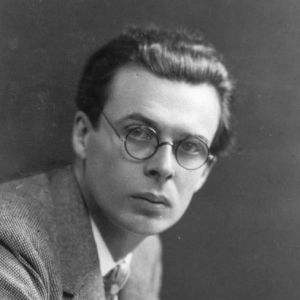
Aldous Huxley (1894–1963) was a British author and philosopher best known for his dystopian novel "Brave New World" (1932), which explores the dehumanizing effects of technology, conformity, and social control. He was a prolific writer, producing works across various genres, including novels, essays, and poetry. Huxley was also deeply interested in mysticism, philosophy, and psychedelics, which influenced later works like "The Doors of Perception" (1954), where he detailed his experiences with the drug mescaline. His work often grapples with complex themes such as individual freedom, societal stability, and the potential dangers of scientific progress.
Author's Books:
Sort by:

by:
Aldous Huxley
THE DEFEAT OF YOUTH I. UNDER THE TREES. here had been phantoms, pale-remembered shapesOf this and this occasion, sisterlyIn their resemblances, each effigyCrowned with the same bright hair above the nape'sWhite rounded firmness, and each body alertWith such swift loveliness, that very restSeemed a poised movement: ... phantoms that impressedBut a faint influence and could bless or hurtNo more than...
more...

by:
Aldous Huxley
CHAPTER I. Along this particular stretch of line no express had ever passed. All the trains—the few that there were—stopped at all the stations. Denis knew the names of those stations by heart. Bole, Tritton, Spavin Delawarr, Knipswich for Timpany, West Bowlby, and, finally, Camlet-on-the-Water. Camlet was where he always got out, leaving the train to creep indolently onward, goodness only knew...
more...