

Categories
- Antiques & Collectibles 13
- Architecture 36
- Art 48
- Bibles 22
- Biography & Autobiography 815
- Body, Mind & Spirit 144
- Business & Economics 28
- Children's Books 15
- Children's Fiction 12
- Computers 4
- Cooking 94
- Crafts & Hobbies 4
- Drama 346
- Education 63
- Family & Relationships 59
- Fiction 11841
- Foreign Language Study 1
- Games 19
- Gardening 17
- Health & Fitness 35
- History 1382
- House & Home 1
- Humor 147
- Juvenile Fiction 1877
- Juvenile Nonfiction 202
- Language Arts & Disciplines 89
- Law 16
- Literary Collections 687
- Literary Criticism 179
- Mathematics 13
- Medical 43
- Music 40
- Nature 181
- Non-Classifiable 1768
- Performing Arts 7
- Periodicals 1453
- Philosophy 65
- Photography 2
- Poetry 897
- Political Science 205
- Psychology 44
- Reference 154
- Religion 516
- Science 128
- Self-Help 86
- Social Science 83
- Sports & Recreation 34
- Study Aids 3
- Technology & Engineering 60
- Transportation 23
- Travel 463
- True Crime 29
A. Hamilton (Alexander Hamilton) Thompson
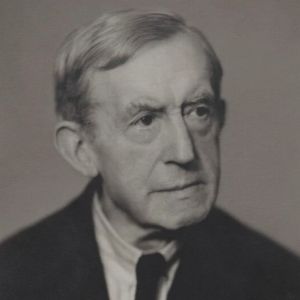
Alexander Hamilton Thompson (1873–1952) was a British historian and writer known for his extensive work on medieval architecture, local history, and church monuments. His scholarly contributions include detailed studies on English medieval churches, castles, and civic buildings, emphasizing their architectural and cultural significance. Among his notable works are "The Historical Growth of the English Parish Church" and "Military Architecture in England During the Middle Ages," which have been valuable resources for historians and architects alike. Thompson also held various academic positions, including a lectureship at the University of Leeds, where he influenced a generation of students with his expertise in medieval studies.
Author's Books:
Sort by:
CHAPTER I THE ORIGIN OF THE CHURCH PLAN IN ENGLAND § 1. Side by side with the establishment of Christianity as the religion of the Roman empire, there appeared a fully developed plan for places of Christian worship. The normal Christian church of the fourth century of our era was an aisled building with the entrance at one end, and a semi-circular projection known as the apse at the other. The body of...
more...