

Categories
- Antiques & Collectibles 13
- Architecture 36
- Art 48
- Bibles 22
- Biography & Autobiography 816
- Body, Mind & Spirit 145
- Business & Economics 32
- Children's Books 15
- Children's Fiction 13
- Computers 4
- Cooking 94
- Crafts & Hobbies 4
- Drama 346
- Education 68
- Family & Relationships 62
- Fiction 11845
- Foreign Language Study 2
- Games 19
- Gardening 17
- Health & Fitness 36
- History 1383
- House & Home 1
- Humor 147
- Juvenile Fiction 1884
- Juvenile Nonfiction 202
- Language Arts & Disciplines 89
- Law 16
- Literary Collections 687
- Literary Criticism 180
- Mathematics 13
- Medical 43
- Music 40
- Nature 181
- Non-Classifiable 1768
- Performing Arts 7
- Periodicals 1453
- Philosophy 65
- Photography 2
- Poetry 898
- Political Science 206
- Psychology 44
- Reference 154
- Religion 516
- Science 128
- Self-Help 89
- Social Science 84
- Sports & Recreation 34
- Study Aids 3
- Technology & Engineering 60
- Transportation 23
- Travel 463
- True Crime 29
A. E. (Alfred Edward) Housman
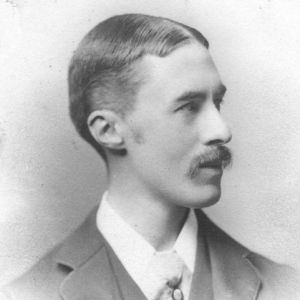
Alfred Edward Housman (1859–1936) was an English classical scholar and poet, best known for his collection of poems "A Shropshire Lad" (1896). His poetry, marked by themes of rural life, fleeting youth, and the inevitability of death, resonated with readers during times of war and personal loss. In addition to his poetry, Housman was a respected scholar of Latin, holding the chair of Latin at both University College London and later at Cambridge. His critical approach to classical texts, particularly in "Manilius" and "Lucan," earned him a reputation for both meticulous scholarship and caustic wit.
Author's Books:
Sort by:
I. THE WEST Beyond the moor and the mountain crest—Comrade, look not on the west—The sun is down and drinks awayFrom air and land the lees of day. The long cloud and the single pineSentinel the ending line,And out beyond it, clear and wan,Reach the gulfs of evening on. The son of woman turns his browWest from forty countries now,And, as the edge of heaven he eyes,Thinks eternal thoughts, and sighs....
more...
INTRODUCTION The method of the poems in A Shropshire Lad illustrates better than any theory how poetry may assume the attire of reality, and yet in speech of the simplest, become in spirit the sheer quality of loveliness. For, in these unobtrusive pages, there is nothing shunned which makes the spectacle of life parade its dark and painful, its ironic and cynical burdens, as well as those images with...
more...