

Religion
- Agnosticism 2
- Antiquities & Archaeology 21
- Atheism 12
- Biblical Criticism & Interpretation 16
- Biblical Meditations 3
- Biblical Reference 1
- Biblical Studies 11
- Buddhism 8
- Christian Church 52
- Christian Education 5
- Christian Life 26
- Christianity 61
- Cults 2
- Devotional 6
- Eastern 2
- Education 4
- Eschatology 1
- Ethics 3
- General 60
- Gnosticism 1
- Hinduism 15
- History 28
- Holidays 10
- Inspirational 1
- Islam 8
- Judaism 3
- Leadership 1
- Meditations 3
- Monasticism 1
- Mysticism 11
- Philosophy 4
- Prayer 26
- Prayerbooks 5
- Religion & Science 12
- Sermons 54
- Spirituality 54
- Theism 2
- Theology 17
- Theosophy 15
Religion Books
Sort by:
by:
Cosmos Mindeleff
INTRODUCTION HISTORY AND LITERATURE Although Canyon de Chelly is one of the best cliff-ruin regions of the United States, it is not easily accessible and is practically unknown. At the time of the conquest of this country by the "Army of the West" in 1846, and of the rush to California in 1849, vague rumors were current of wonderful "cities" built in the cliffs, but the position of the...
more...
THE MATERIAL OF THE MANUSCRIPTS. The three manuscripts which we possess of the ancient Maya peoples of Central America, the Dresden (Dr.), the Madrid (Tro.-Cort.) and the Paris (Per.) manuscripts, all contain a series of pictorial representations of human figures, which, beyond question, should be regarded as figures of gods. Together with these are a number of animal figures, some with human bodies,...
more...

Introduction. Richard Rolle of Hampole is the earliest in time of our famous English Mystics. Born in or about 1300, he died in 1349, seven years after Mother Julian of Norwich was born. Walter Hilton died in 1392. An exhaustive account of Rolle's life is given in Vol. ii. of Professor Horstman's Edition of his works, a book unfortunately out of print. The main facts are recorded in a brief...
more...

by:
DadaBhagwan
Im Laufe des Lebens werden viele Menschen durch Umstände verwirrt, die außerhalb ihrer Kontrolle liegen - sowohl ihre eigenen, als auch die der anderen. Während der Untersuchung der Prinzipienvon Karma mag sich jemand immer noch fragen: "Warum passieren guten Menschen schlechte Dinge?" Im Buch "Die Wissenschaft von Karma" erklärt Param Pujya Dada Bhagwan diepräzise Definition von...
more...
by:
Ambrose Shepherd
YOUTH AND AFTER "And Terah died in Haran." This bit of prosaic information becomes suggestive by the emphasis of one word: "And Terah died in Haran." This was not his birthplace, but here he ended his days, and that for a reason over which it is worth our while to pause. "And Terah died in Haran." What of that? All people have died somewhere, who have lived and are dead. When we...
more...
by:
Robert Bridges
What St. Augustin says of the emotion which he felt on hearing the music in the Portian basilica at Milan in the year 386 has always seemed to me a good illustration of the relativity of musical expression; I mean how much more its ethical significance depends on the musical experience of the hearer, than on any special accomplishment or intrinsic development of the art. Knowing of what kind that music...
more...

by:
Sydney T. Klein
PREFACE In venturing to prepare this little volume for the eyes of the reading public, I am fully aware of the difficulties of the subject and the inadequacy of the expressions I have been able to employ, but I have made the attempt at the request of those who have found consolation in some of the thoughts herein embodied; and the messages left by others before they passed away, embolden me to hope...
more...
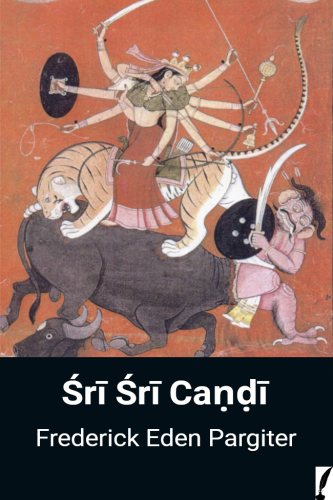
Śrī Śrī Caṇḍī is a revered text among Śāktas, who follow Śaktism — a branch of Hinduism. It is read during the worship of Goddess Durgā and is especially popular in Eastern India, particularly in Bengal — a Śākta stronghold. Śrī Śrī Caṇḍī, also known as Devī Māhātmya or Durgā Saptaśatī, is an excerpt from the Mārkanḍeya Purāṇa, which is one of the 18...
more...
LECTURE I. Importance of the anniversaries connected with the years 1894-1897.—Christianity in Kent immediately before Augustine.—Dates of Bishop Luidhard and Queen Bertha.—Romano-British Churches in Canterbury.—Who were the Britons.—Traditional origin of British Christianity.—St. Paul.—Joseph of Arimathea.—Glastonbury.—Roman references to Britain. We are approaching an anniversary of...
more...
DISCOURSE I. “In whom also we have obtained an inheritance, being predestinated according to the purpose of him who worketh all things after the counsel of his own will.”—Eph. i. 11. It would very naturally be expected of a preacher, selecting this passage as the foundation of his discourse, that he would have something to say upon the subject of predestination. It is my purpose to make this the...
more...