

Fiction
- Action & Adventure 184
- Alternative History 1
- Biographical 15
- Christian 59
- Classics 6965
- Coming of Age 5
- Contemporary Women 4
- Erotica 8
- Espionage/Intrigue 12
- Fairy Tales, Folklore & Mythology 236
- Family Life 169
- Fantasy 118
- Gay 1
- General 596
- Ghost 32
- Historical 809
- Horror 43
- Humorous 162
- Jewish 25
- Legal 4
- Literary 2
- Medical 23
- Mystery & Detective 315
- Occult 1
- Political 49
- Psychological 41
- Religious 64
- Romance 162
- Sagas 11
- Science Fiction 730
- Sea Stories 113
- Short Stories (single author) 539
- Sports 10
- Suspense 2
- Technological 8
- Thrillers 3
- Urban Life 31
- Visionary & Metaphysical 1
- War & Military 173
- Westerns 199
Fiction Books
Sort by:
by:
Talbot Mundy
THE NJO HAPA* SONG Green, ah greener than emeralds are, tree-tops beckon the dhows to land, White, oh whiter than diamonds are, blue waves burst on the amber sand, And nothing is fairer than Zanzibar from the Isles o' the West to the Marquesand. I was old when the world was wild with youth (All love was lawless...
more...
TALE XIX. Pauline, being in love with a gentleman no less than he was with her, and finding that he, because forbidden ever again to speak with her, had entered the monastery of the Observance, gained admittance for her own part into the convent of St. Clara, where she took the veil; thus fulfilling the desire she had conceived to bring the gentleman's love and her own to a like ending in respect...
more...

INTRODUCTION The strongest impulse of the human heart is for self-expression. The simplest form of expression is speech. Speech is the instinctive use of a natural instrument, the voice. The failure to deal justly with this simple and natural means of expression is one of the serious failures of our educational system. Whether the student is to wait on another's table or be host at his own;...
more...
by:
Myrtle Reed
The Master Plays The fire blazed newly from its embers and set strange shadows to dancing upon the polished floor. Now and then, there was a gleam from some dark mahogany surface and an answering flash from a bit of old silver in the cabinet. April, warm with May’s promise, came in through the open window, laden with the wholesome fragrance of growing things, and yet, because an old lady loved it,...
more...

From DIRA IVTo Central Colonial Board There is intelligent life on Earth. After millennia of lifelessness, intelligence flourishes here with an extravagance of energy that has been a constant amazement to all the members of the survey team. It multiplies and surges to its fulfillment at an exponential rate. Even within the short period of our visit the Terrans have made significant advances. They have...
more...
by:
Joaquin Miller
With vast foundations seamed and knit, And wrought and bound by golden bars, Sierra's peaks serenely sit And challenge heaven's sentry-stars. Why this book? Because last year, in the heart of the Sierras, I saw women and children chained together and marched down from their cool, healthy homes to degradation and death on the Reservation. At the side of this long, chained line, urged on and...
more...
by:
Madame Burette
CHAPTER I. The next morning Edmond felt himself considerably better. Cavalier continually flitted before his eyes, and it appeared to him as if arms lifted him from his couch, in order to follow his friends. When Eustace had fallen asleep towards noon, he arose quietly, took his rifle and with light footsteps hastily descended the mountain path. He felt light and well, it seemed as if he had never yet...
more...

PREFACE Measured by the standards of duration, absence of violent commotions, maintenance of law and order, general prosperity and contentment of the people, and by the extent of its influence on the institutions and political thought of other lands, the English government has been one of the most remarkable the world has ever known. An attempt, therefore, to study it at any salient epoch cannot be...
more...
by:
Maud Diver
JUDGE FOR YOURSELF. "Do we move ourselves, or are moved by an Unseen Hand at a game?"—Tennyson. Honor Meredith folded her arms upon the window-ledge of the carriage and looked out into the night: a night of strange, unearthly beauty. The full moon hung low in the west like a lamp. A chequered mantle of light and shadow lay over the mountain-barrier of India's north-western frontier, and...
more...
by:
George P. Marsh
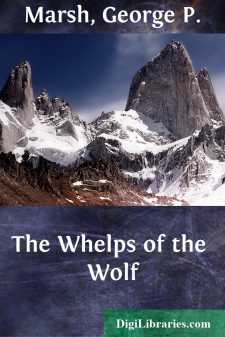
CHAPTER I THE LAND OF THE WINDIGO The solitudes of the East Coast had shaken off the grip of the long snows. A thousand streams and rivers choked with snow water from bleak Ungava hills plunged and foamed and raced into the west, seeking the salt Hudson's Bay, the "Big Water" of the Crees. In the lakes the honeycombed ice was daily fading under the strengthening sun. Already, here and...
more...