

Education Books
Sort by:

INTRODUCTION The four essays on education which Herbert Spencer published in a single volume in 1861 were all written and separately published between 1854 and 1859. Their tone was aggressive and their proposals revolutionary; although all the doctrines—with one important exception—had already been vigorously preached by earlier writers on education, as Spencer himself was at pains to point out....
more...

This collection of scattered thoughts and observations has little order or continuity; it was begun to give pleasure to a good mother who thinks for herself. My first idea was to write a tract a few pages long, but I was carried away by my subject, and before I knew what I was doing my tract had become a kind of book, too large indeed for the matter contained in it, but too small for the subject of...
more...
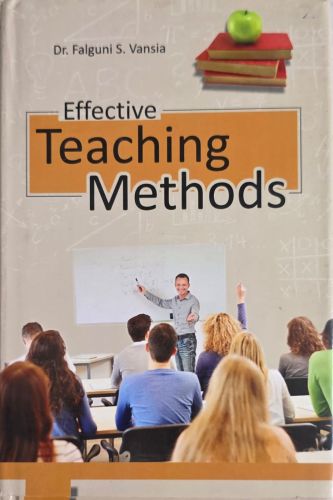
In the fast changing scenario of the world the field of teaching and learning, that is, education is also undergoing and witnessing changing circumstances putting immense pressure on both teacher and learner. The present situation and future vision require that to become wholesome the education should inculcate character building and problem-solving attitudes and should reflect life in every phase of...
more...

IDEALS. A noble aim,Faithfully kept, is as a noble deed.Wordsworth. To few men does life bring a brighter day than that which places the crown upon their scholastic labors, and bids them go forth from the halls of the Alma Mater to the great world's battlefield. There is a freshness in these early triumphs which, like the bloom and fragrance of the flower, is quickly lost, never to be found again...
more...
by:
Maria Montessori
DR. MONTESSORI’S OWN HANDBOOK Recent years have seen a remarkable improvement in the conditions of child life. In all civilized countries, but especially in England, statistics show a decrease in infant mortality. Related to this decrease in mortality a corresponding improvement is to be seen in the physical development of children; they are physically finer and more vigorous. It has been the...
more...

series: Der Deutschlehrer aus Kampot, Book 5
by:
Heiko R.
Dieses Buch beschreibt den Alltag des Online-Unterrichts jenseits von Technik, Plattformen und Methoden. Im Mittelpunkt stehen Haltung, Verantwortung und die Realität von Unterricht über Distanz. Der Autor schildert typische Situationen aus seiner Praxis mit Lernenden aus aller Welt und zeigt, was Online-Unterricht leisten kann – und was nicht. Ein sachlicher Blick auf moderne Bildungsrealität ohne...
more...

series: Der Deutschlehrer aus Kampot, Book 6
by:
Heiko R.
Der Deutsche aus Kampot – Warum guter Unterricht oft unbequem ist ist kein klassisches Sprachlern- oder Motivationsbuch. Es richtet sich an erwachsene Deutschlernende und Lehrkräfte, die jenseits von Durchhalteparolen verstehen wollen, warum Lernen trotz Einsatz, Fleiß und guter Absichten häufig nicht zum gewünschten Ergebnis führt. Der Autor analysiert typische Bruchstellen im...
more...

series: Der Deutschlehrer aus Kampot, Book 4
by:
Heiko R.
Motivation gilt häufig als Schlüssel zum Lernerfolg. Dieses Buch hinterfragt diese Annahme und zeigt, warum Motivation ohne Struktur, Orientierung und realistische Einschätzung oft wirkungslos bleibt. Der Text richtet sich an Lernende und Lehrkräfte, die Lernen nicht emotional, sondern funktional verstehen wollen.

series: Der Deutschlehrer aus Kampot, Book 3
by:
Heiko R.
Dieses Buch behandelt die Rolle von Ehrlichkeit, Grenzen und Klarheit im Unterricht. Es zeigt, warum guter Unterricht nicht immer angenehm ist und weshalb Irritation, Frustration und klare Rückmeldungen zum Lernprozess gehören. Der Autor beschreibt Unterricht als Arbeitsraum, nicht als Wohlfühlangebot.

series: Der Deutschlehrer aus Kampot, Book 2
by:
Heiko R.
Dieses Buch beschreibt den Kontrast zwischen Erwartungen an Unterricht und der tatsächlichen Realität des Lernens. Anhand alltäglicher Beobachtungen aus dem Unterricht werden Wunschbilder, Projektionen und Missverständnisse sichtbar gemacht. Der Text verzichtet bewusst auf Dramatisierung und konzentriert sich auf nüchterne Einordnung und Reflexion.